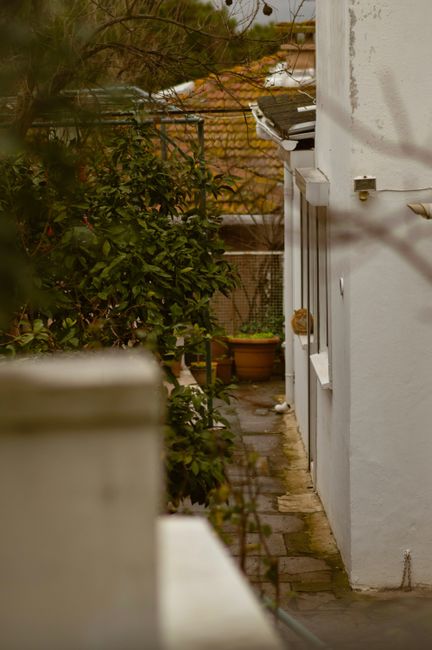
Barnet gardeners narrow back gardens access solutions

If you live with a narrow back garden in Barnet, you already know the odd little frustrations it creates. A mower that won't fit through the gate. Compost bags squeezed sideways down a passage. A hedge that looks simple from the window but becomes a wrestling match once you try to reach it. Barnet gardeners narrow back gardens access solutions are all about making those awkward spaces workable, safer, and far less stressful.
The good news? Tight access does not automatically mean limited options. In many Barnet homes, especially terraces, side-return plots, and older properties, the best results come from smart planning rather than heavy equipment. This guide explains how access solutions work, what matters most, and how a knowledgeable garden team can turn a cramped, fiddly space into something genuinely usable.
We'll cover practical access improvements, common pitfalls, the best methods for maintenance and landscaping, and when it makes sense to bring in professional help. No fluff. Just the stuff that saves time, avoids damage, and makes the garden feel easier to live with.
Why Barnet gardeners narrow back gardens access solutions Matters
Narrow garden access changes almost everything about how a space is maintained. It affects the tools you can use, the materials you can bring in, the speed of the job, and even how much wear and tear the garden gets during routine work. That sounds obvious, but people often only realise it when a project has already started and the gate proves too narrow, or the only route to the back is a long, muddy side passage.
In practical terms, access is the difference between a garden job that feels smooth and one that turns into a puzzle. And let's face it, nobody wants to spend a Saturday morning carrying soil in small buckets because a wheelbarrow cannot get through. Good access planning protects paths, fences, paving, lawn edges, and the plants themselves. It also helps the work finish faster and with less disruption to the household.
For Barnet homes, this matters because many gardens are compact and enclosed. Some have narrow side entrances, some open only through the property, and some have awkward steps or tight corners that make everyday maintenance harder than it should be. A thoughtful approach can make a huge difference, even without major structural changes.
Expert summary: In narrow back gardens, access is not just a convenience issue. It shapes the quality, safety, cost, and long-term maintainability of the entire outdoor space.
When access is planned properly, even a small garden can be kept neat without feeling like a constant battle. That is the whole point.
How Barnet gardeners narrow back gardens access solutions Works
Access solutions usually start with a simple assessment: how does someone or something get from the street to the back garden, and what is likely to struggle on that route? A good gardener will look at gate width, passage width, turning space, surface condition, step height, overhead obstructions, and any spots where large materials must be handled carefully.
From there, the solution can take several forms. Sometimes it is as straightforward as using narrower tools, modular materials, or hand-carry methods. Sometimes it means changing how the garden is laid out so future maintenance becomes easier. In more awkward spaces, it may involve rethinking storage, routes, or the shape of beds and paths. Truth be told, there is rarely one magic fix. It is usually a sensible combination of small improvements.
For example, a narrow terraced garden may work far better if waste is moved in lighter loads, planting is simplified near the access route, and the lawn area is sized to suit compact mowing equipment. If the garden is being redesigned, a team may also look at whether fencing, edging, or a deck layout can improve movement through the space. You can see how this links naturally with broader landscape gardening or even a more structural landscaping project when the access issue is severe.
There is also the question of maintenance frequency. A garden that is easy to reach can be worked on more regularly, which often prevents larger problems from building up. That is why access solutions are not only about a one-off job. They affect the life of the garden long term.
Key Benefits and Practical Advantages
The biggest benefit is simple: less struggle. But there are several other advantages that are worth spelling out because they tend to be overlooked.
- Safer handling: Fewer awkward lifts, fewer trips, and less chance of damaging paving, walls, or planting.
- Faster completion: When materials and tools can move more efficiently, the whole job tends to run more smoothly.
- Better finish: Narrow access often means careful, lighter-touch work, which can actually produce a cleaner result in small spaces.
- Lower disruption: Less traffic through the house or passage means less mess brought indoors.
- Improved garden usability: Once access is sorted, regular care becomes easier to keep up with.
- Smarter use of space: Access planning often reveals wasted corners or awkward routes that can be improved.
There is also a hidden benefit: confidence. If you know the back garden is manageable, you're far more likely to maintain it properly rather than letting it slide. That means less overgrowth, fewer blockages, and fewer painful "we'll deal with it later" moments. We've all had those, haven't we?
For many homeowners, the biggest practical win comes from combining access planning with routine care such as garden maintenance and, where needed, more targeted services like hedge trimming or lawn mowing. Narrow access stops feeling like a problem when the garden is set up for regular, manageable work.
Who This Is For and When It Makes Sense
This topic matters most for homeowners and landlords with compact or awkward outdoor spaces. If your back garden is reached through a side passage, a narrow alley, a long path, or a series of tight turns, you are squarely in the target group. It also applies to older properties where access was never designed with today's tools in mind.
You may need these solutions if:
- you cannot get standard garden equipment into the space easily;
- you have overgrown beds, hedges, or borders that are difficult to reach;
- you want to clear the garden without damaging fences or paving;
- you are planning a redesign and need to think about future maintenance;
- you struggle to move waste, soil, timber, or paving materials through the property;
- the garden is so enclosed that even small jobs become time-consuming.
It also makes sense if you are preparing a property for sale or rental. In a competitive market, a tidy and easy-to-maintain garden can be a quiet plus point. Not glamorous, perhaps, but definitely useful.
Sometimes the issue is not the width alone. It is the combination of width, surface condition, access steps, poor lighting, and corners that force repeated lifting. A narrow access route with a good surface is very different from a narrow route with loose slabs and a steep turn. That detail matters more than people think.
Step-by-Step Guidance
If you are trying to solve a narrow back garden access problem properly, the best approach is methodical. Here is the process that tends to work best.
- Measure the route carefully. Check gate width, passage width, height restrictions, and the tightest turning points. Measure twice, honestly. It saves hassle later.
- Identify the biggest movement challenge. Is it waste removal, equipment access, material delivery, or just general movement around the garden?
- Decide what must go through the access route. A small pruning job and a full clearance require very different plans.
- Choose compact methods and tools. Smaller mowers, hand tools, folding equipment, and bagged waste handling often work better than forcing standard kit through tight spaces.
- Protect the route. Use boards, temporary covers, or sensible movement patterns to reduce damage to slabs, turf, or walls.
- Work from the back inward. In a cramped garden, starting at the furthest point and moving outward often keeps things neater.
- Separate waste as you go. Do not let cuttings, clippings, and soil build into a bottleneck right by the gate. That becomes messy fast.
- Review what could be improved permanently. If the same problem keeps coming back, consider a layout change, better storage, or a redesign of access-sensitive areas.
A real-life example: a small Barnet courtyard-style garden may need a full clearance before replanting, but the access route only allows one person at a time to pass through. In that case, working in stages, using lighter waste bags, and staging materials close to the exit can be much more effective than trying to do everything in one go. Small adjustment, big difference.
If the job is bigger than a simple tidy-up, browsing the broader service range in the services overview can help you think about which parts are maintenance and which parts need a structural or design response.
Expert Tips for Better Results
The best access work is usually not dramatic. It is careful, practical, and a little bit boring in the best possible way. Here are the habits that tend to make the biggest difference.
- Keep the access route as clear as possible. Even one stray bin, planter, or stack of pots can create unnecessary friction.
- Use light, repeated movements instead of heavy single lifts. It takes a bit longer, but it reduces damage and strain.
- Choose planting with maintenance in mind. In tight gardens, low-maintenance borders are often smarter than dense, high-growth planting.
- Think about seasonal workload. Wet winter routes, spring pruning, and summer mowing all present different access issues.
- Match tools to the route, not the other way round. Forcing a large machine into a small space is how fences get scratched and tempers rise.
- Build in a working corridor. Even a narrow garden benefits from a clear line of movement from access point to work area.
One of the most overlooked tips is to plan for waste as carefully as you plan for the job itself. Waste is often what clogs up a narrow garden. If you handle clippings, branches, and broken material progressively rather than at the end, the whole process stays calmer. A little calmer, anyway.
If tree growth is one of the things blocking access or crowding the route, a targeted service like tree lopping and removal may be worth considering, provided it is appropriate for the plant, the site, and the safety conditions. Not every tree needs major work, so judgment matters.
Common Mistakes to Avoid
Narrow access problems are often made worse by well-meaning shortcuts. Some of these mistakes are surprisingly common.
- Assuming a standard tool set will do. It often won't. Tight access usually needs a different kit list.
- Ignoring the return journey. People plan how materials get in, then forget how waste gets out. That part matters just as much.
- Rushing through wet or soft ground. This can create ruts, muddy slips, and lasting damage.
- Overfilling bags or barrows. One heavy load may seem efficient, but it can slow everything down and increase the risk of accidents.
- Blocking the route with cuttings or tools. In a narrow garden, clutter multiplies quickly.
- Forgetting future maintenance. A solution that works once but makes the next visit harder is not really a solution.
Another common issue is leaving access planning until after the garden design is decided. That can lead to beautiful-looking layouts that are annoying to maintain. A deck, for example, may look clean and crisp, but if access to the edge areas becomes awkward, keeping it tidy can be a headache. That is why some homeowners pair access improvements with carefully thought-through decking services or wider planting changes.
One slightly awkward truth: people often focus on the fun bit first. New plants, new colour, new features. Fair enough. But access is the thing that decides whether all that nice stuff is easy to care for later.
Tools, Resources and Recommendations
For narrow back gardens, the best tools are usually compact, controlled, and easy to carry. You do not need the biggest machine in the shed. In fact, smaller often wins here.
| Need | Practical option | Why it helps in narrow access |
|---|---|---|
| Grass cutting | Compact mower or hand shears for very small areas | Easier to carry, turn, and store |
| Hedge work | Lightweight hedge trimmers and step-by-step cutting | Reduces strain and avoids overreaching |
| Waste removal | Smaller bags, staged collection, repeated trips | Prevents bottlenecks and keeps the route open |
| Garden clearance | Section-by-section clearance plan | Makes awkward spaces easier to manage |
| Surface protection | Temporary boards or protective covers | Helps preserve paving, turf, and edges |
For larger jobs, a professional team will usually bring more than just tools. They bring sequencing. That sounds dull, but it is a big deal. Knowing what to move first, where to stage waste, and how to avoid wasting steps makes the work more efficient. A good team also understands when a narrow route should be treated as a soft limitation rather than a hard stop.
If your garden has become heavily overgrown, a dedicated garden clearance service is often the most practical starting point. Once the space is cleared, access issues become much easier to assess properly.
Law, Compliance, Standards, or Best Practice
For garden work in the UK, compliance is mostly about doing the job safely and responsibly. Exact duties can vary depending on the site, the people involved, and the type of work being carried out, so it is wise to be cautious rather than overly specific.
In general, best practice includes:
- keeping walkways reasonably clear and safe while work is in progress;
- using appropriate manual handling methods for heavy or awkward items;
- making sure tools and machinery are suitable for the site conditions;
- protecting property surfaces from avoidable damage;
- treating trees, hedges, and structures with care rather than force;
- checking whether any work needs specialist attention before starting.
If access is especially tight, safety planning matters even more. That includes communication between the person doing the work and the person opening routes, moving materials, or supervising. It can feel a bit over-cautious at times, but in small spaces a careless movement is enough to create a problem.
For reassurance, reputable firms normally explain their approach to safety, insurance, and working practices. It is sensible to review pages such as health and safety policy and insurance and safety before booking more involved work. If you are comparing providers, that trust information is not decoration. It matters.
Some clients also like to understand how quotes, payment, and wider service terms are handled. That is fair enough, especially for larger jobs or multi-stage projects. Clear expectations reduce friction before anyone picks up a tool.
Options, Methods, or Comparison Table
There are several ways to tackle narrow garden access, and the right choice depends on the job size, the space, and your budget. Here is a simple comparison.
| Method | Best for | Pros | Trade-offs |
|---|---|---|---|
| Manual carry and small tools | Light maintenance, pruning, tidying | Flexible, low impact, usually easiest to fit through tight routes | Slower for larger jobs |
| Sectioned clearance | Overgrown or cluttered gardens | Keeps the route open and manageable | Needs planning and patience |
| Layout adjustments | Recurring maintenance problems | Improves long-term usability | May need design work or upfront cost |
| Access-led landscaping | Major redesigns or difficult plots | Can transform the garden experience | More involved and usually not the quickest fix |
| Routine maintenance plan | Gardens that are already under control | Prevents access problems from returning | Only works if kept up consistently |
If you are not sure which route to take, start with the least disruptive option that solves the immediate issue. Then work forward from there. That sounds almost too simple, but it is often the right call.
Case Study or Real-World Example
Here is a realistic example from the kind of property many Barnet gardeners come across. A narrow terraced back garden had a long, tight passage from the front, a small lawn area, mature shrubs along one side, and a hedge that had grown into the only comfortable working route. The homeowner had tried to manage it themselves, but mowing and pruning became more awkward every month.
The first job was not redesigning the whole garden. It was just making access workable. The route was cleared, the hedge was cut back in stages, and the lawn area was reduced to a size that could be managed more easily with compact equipment. Waste was removed in smaller loads so the passage stayed usable. After that, the owner could actually move through the space without constantly stepping around tools.
Nothing fancy. No miracle transformation. But the result was a garden that stopped fighting back. The owner later combined regular upkeep with garden maintenance visits and a more measured approach to hedge growth. That made the biggest difference. Not the dramatic bit, the steady bit.
What stands out in jobs like this is how often the solution is practical rather than dramatic. A narrow garden does not need to be perfect. It just needs to be usable, safe, and easy enough to keep under control.
Practical Checklist
Use this checklist before booking work or starting a garden project with limited access.
- Measure the narrowest point of the route.
- Check whether gates open fully and freely.
- Identify steps, slopes, uneven slabs, or slippery spots.
- List the heaviest materials that need to pass through.
- Decide whether waste can be staged in sections.
- Choose compact tools where possible.
- Protect paving, turf, fencing, and walls.
- Remove clutter from the route before work begins.
- Confirm whether the garden needs clearance before maintenance.
- Think ahead about how the space will be maintained after the job.
- Review safety, insurance, and payment details before proceeding.
If you can tick most of those boxes, the job will usually run more smoothly. If not, no panic. It just means the planning stage needs a bit more attention.
Get a free quote today and see how much you can save.
Conclusion
Narrow back gardens are common in Barnet, and they are not a problem to be embarrassed about. They just need a different kind of thinking. The right access solution might be as simple as better tool choice, a smarter work sequence, or a cleaner route through the property. In other cases, it may involve clearance, maintenance changes, or a more considered landscaping plan.
The main thing is to treat access as part of the garden, not an afterthought. Once you do that, everything becomes easier: maintenance, planting, tidying, waste removal, and long-term use. It is one of those small changes that quietly improves everything else.
If your garden feels awkward to manage right now, that does not mean it has to stay that way. With the right planning, even a tight space can become calm, workable, and genuinely pleasant to look after. And that, really, is the point.
Frequently Asked Questions
What are Barnet gardeners narrow back gardens access solutions?
They are practical methods used to make tight or awkward garden spaces easier to reach, maintain, clear, or redesign. That can include compact tools, staged waste removal, route protection, or layout changes.
Why is narrow access such a big issue in back gardens?
Because it affects almost every part of the job: what tools can be used, how safely materials move, how quickly work is completed, and how much disturbance the garden suffers.
Can a very narrow garden still be maintained properly?
Yes. In many cases, it just needs a more careful approach. Smaller tools, regular maintenance, and sensible access planning can make a big difference.
Do I need garden clearance before access improvements?
Sometimes. If the space is heavily overgrown or cluttered, clearance is often the first sensible step because it reveals the true access conditions and makes the route safer to use.
What is the best way to move waste through a narrow passage?
Usually in smaller, staged loads rather than trying to move everything at once. That keeps the route usable and reduces the risk of damage or spillage.
Is landscaping possible when access is poor?
Yes, but the design needs to respect the access limits. A good layout can make future maintenance much easier, especially if the space is planned with movement in mind.
What should I ask a gardener before booking?
Ask how they handle tight access, what equipment they use, how they protect the property, and whether they have a clear plan for moving waste and materials safely.
Can narrow access make a garden job more expensive?
It can, because work may take longer and require more manual handling. That said, the actual cost depends on the size of the job and the specific route, so it is best to request a tailored quote.
What if my garden has a side passage but it is too tight for equipment?
That is common. Many jobs can still be done with smaller tools, hand-carry methods, or section-by-section working. A tight passage is a limitation, not necessarily a blocker.
How do I stop the access route getting damaged?
Use protective boards or coverings where needed, avoid overloading the route, and keep foot traffic and materials moving in a controlled way. Small care taken early usually prevents bigger repairs later.
Does regular maintenance help with access problems?
Absolutely. Regular garden maintenance stops hedges, borders, and waste buildup from creeping into the access route, which makes future work far easier.
Where can I find more information about service standards and policies?
You can review the site's about us information, along with the pages covering pricing, safety, and service terms to understand how work is approached and what to expect.